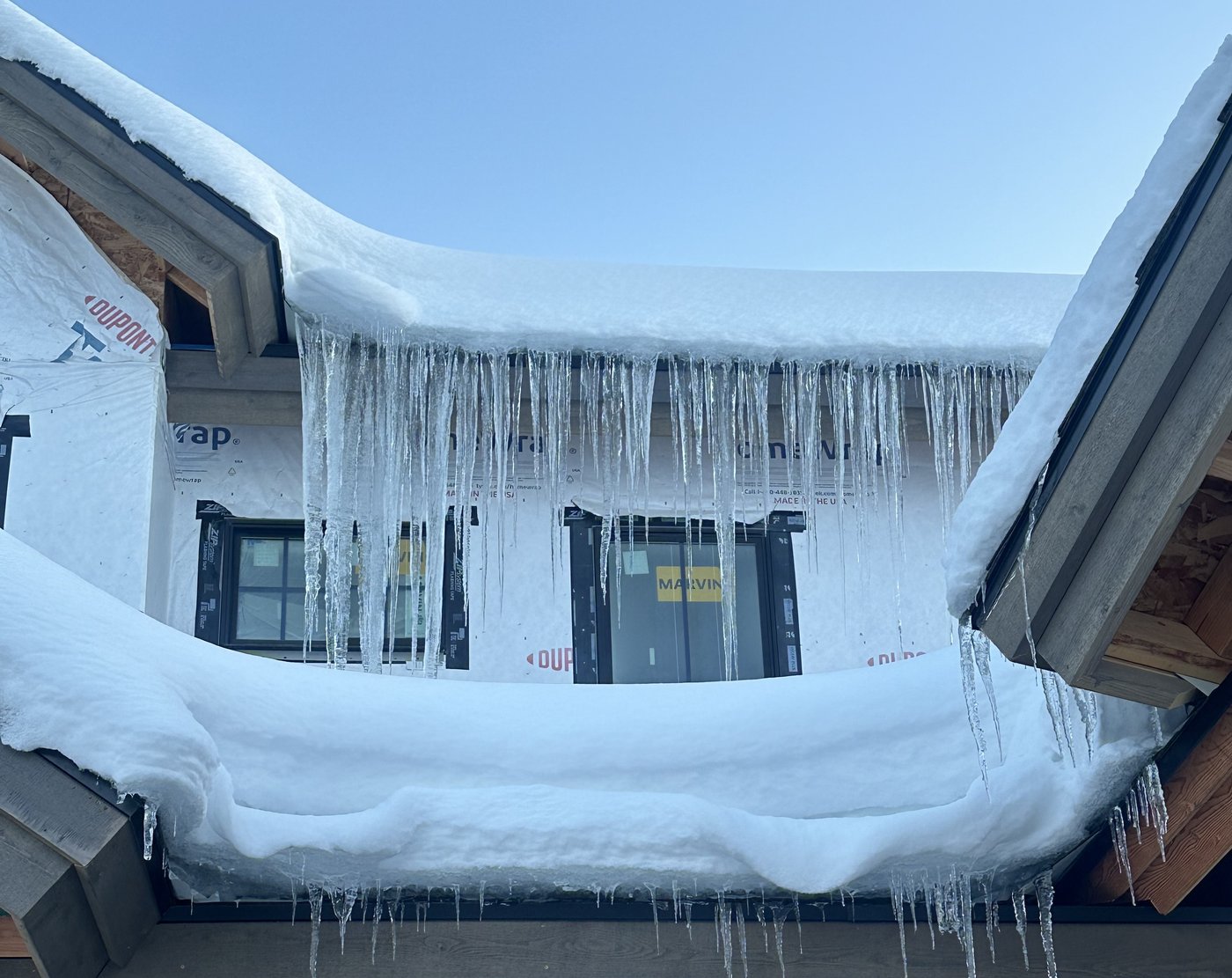
Boise winters are milder than much of Idaho, but The Treasure Valley still delivers enough freeze-thaw events, occasional ice storms, and periodic heavy snowfall to stress roofs that aren't prepared. Most winter roof problems in Boise are preventable with fall maintenance and a few straightforward monitoring habits once the cold season arrives.
Managing snow load
Most Boise homes are designed to handle the snow loads typical for Ada County -- generally lighter than what structures in mountain communities like McCall or Donnelly are built for. Problems with snow load arise during unusually heavy snow seasons or on older homes with roof structures that have been compromised by long-term moisture damage or deferred maintenance.
Signs that snow load may be approaching a concern include cracking or popping sounds from the roof structure, visible sagging at the ridge or along rafters, and doors or windows that have become difficult to operate due to structural movement. Any of these warrants immediate attention regardless of weather conditions.
For routine snowfall, most Boise and Meridian homeowners don't need to actively manage roof snow. If you choose to use a roof rake for peace of mind after a heavy event, use a plastic-edged version from the ground and avoid raking aggressively -- shingles are more brittle in cold temperatures and can be damaged by hard contact with metal rake edges.
What not to do
Do not attempt to chip ice from the roof surface with sharp tools. Ice removal with picks or ice choppers routinely punctures roofing membrane, damages shingles, and creates new leak points in the process of addressing ice dam concerns. The risk significantly outweighs the benefit.
Do not apply rock salt directly to roofing material. Rock salt damages asphalt shingles, corrodes metal flashing, and kills vegetation at the foundation when it washes off. Calcium chloride placed in a stocking and laid across an ice dam is the standard approach when intervention is needed -- it creates a melt channel without direct contact with the shingle surface.
Do not ignore active leaks because it's winter. Water that enters through a roof leak during winter doesn't stop moving once it's inside -- it migrates through insulation and framing and can cause mold growth and structural damage before temperatures warm enough for it to become visible on interior surfaces.
When to call during winter
Active interior water intrusion from ice dams or roof failures warrants an immediate call regardless of the season. Blue Goat Roofing responds to emergency situations year-round for homeowners throughout Nampa, Eagle, and The Treasure Valley. For non-emergency concerns discovered during winter -- granule accumulation, minor visible wear, gutters pulling at attachment points -- we can schedule a spring assessment that addresses those issues in better working conditions unless you prefer earlier attention.