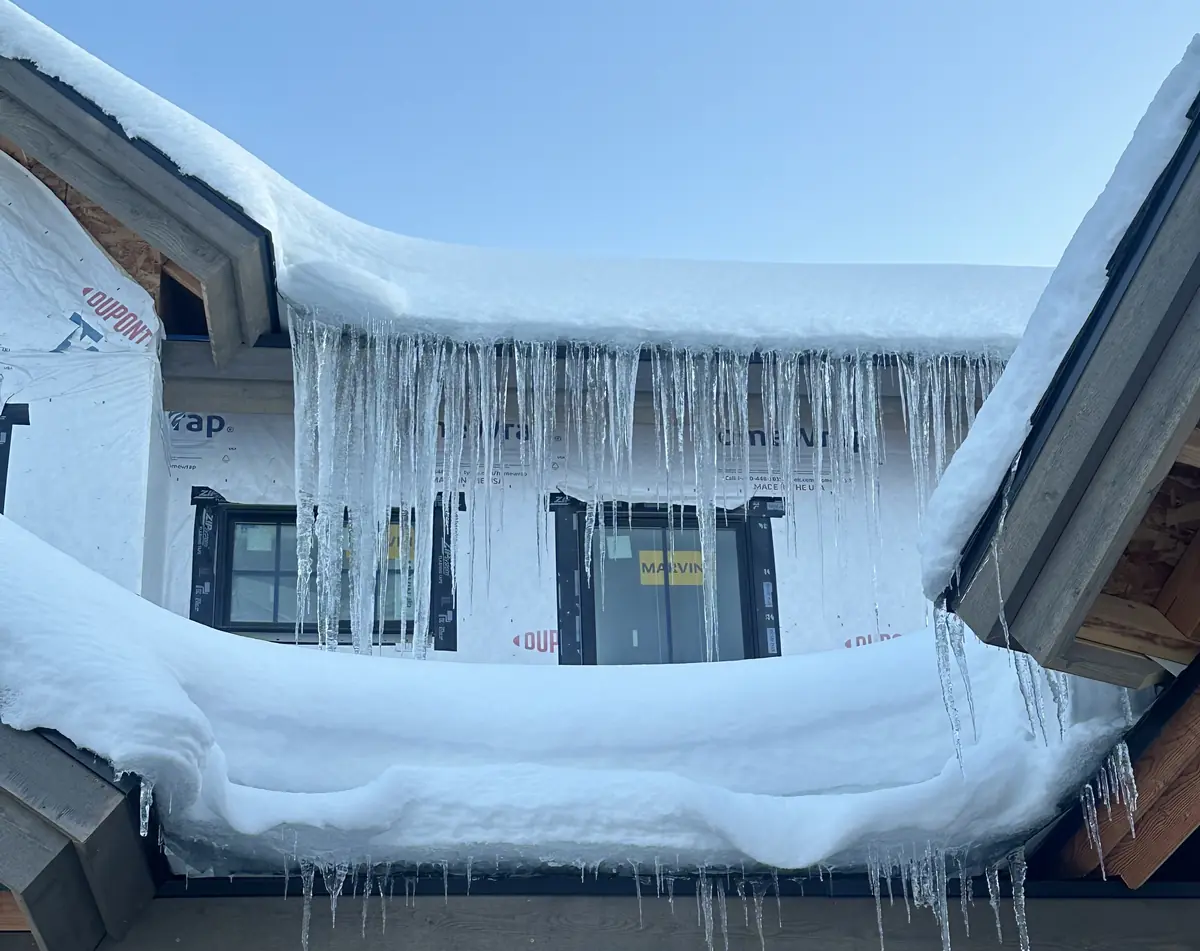
Ice dams form when heat from inside your home warms the roof deck enough to melt snow near the peak, while the eaves remain cold enough to refreeze that meltwater as it runs down. The result is a wall of ice at the roof's edge that forces water backward under shingles and, eventually, into your home. In Boise's climate, the combination of occasional heavy snowfall and significant daily temperature swings creates conditions where ice dams form more often than most homeowners expect.
Why ice dams form on Boise homes
The root cause is almost always a thermal failure at the boundary between the living space and the attic. Heat from the rooms below escapes into the attic through gaps around light fixtures, attic access hatches, plumbing penetrations, and inadequately insulated ceiling assemblies. When that escaping heat warms the roof deck enough to melt snow, but the eaves -- which extend past the heated building envelope -- stay at or below freezing, the meltwater refreezes before it can drain off.
Specific conditions in Boise homes that create ice dam vulnerability include insufficient attic insulation below current Idaho code standards, blocked soffit vents that prevent the cold air flow needed to keep the roof deck cold, bathroom or kitchen exhaust fans vented into the attic instead of to the exterior, and recessed lighting installed in insulated ceilings without proper air sealing.
Prevention: the right approach
The permanent solution to ice dams is improving the thermal performance of the ceiling and attic ventilation system -- not treating the symptom after ice forms. Bringing attic insulation to current code levels (R-49 is the current Idaho requirement for most climate zones) and ensuring soffit and ridge vents are unobstructed eliminates the heat source that drives ice dam formation.
Air sealing the ceiling before adding insulation is critical because bulk insulation alone doesn't stop air movement. A gap the size of a quarter around a light fixture can allow as much heat transfer as several square feet of missing insulation. A qualified contractor who does both roofing and insulation work can assess the actual thermal boundary performance during a roof inspection.
For immediate protection during a heavy snow year, a roof rake can reduce the snow available on lower roof sections before the melt-refreeze cycle begins. Use a plastic-edged rake and work from the ground -- getting on a snow-covered roof is dangerous and rarely necessary for this task.
If you already have an ice dam
Calcium chloride ice melt placed in a stocking and laid perpendicular to the dam creates a channel for trapped meltwater to drain. Avoid rock salt, which damages shingles and gutters, and avoid using sharp tools to chip at the ice, which can puncture the membrane beneath. If water is actively entering the home, the priority is protecting interior finishes with towels and containers and calling for a professional assessment of the damage once the ice has melted.
Blue Goat Roofing assesses ice dam damage and underlying causes throughout Boise, Meridian, Eagle, and Nampa. If your home has repeated ice dam issues, the fix is almost always in the attic, not on the roof surface.