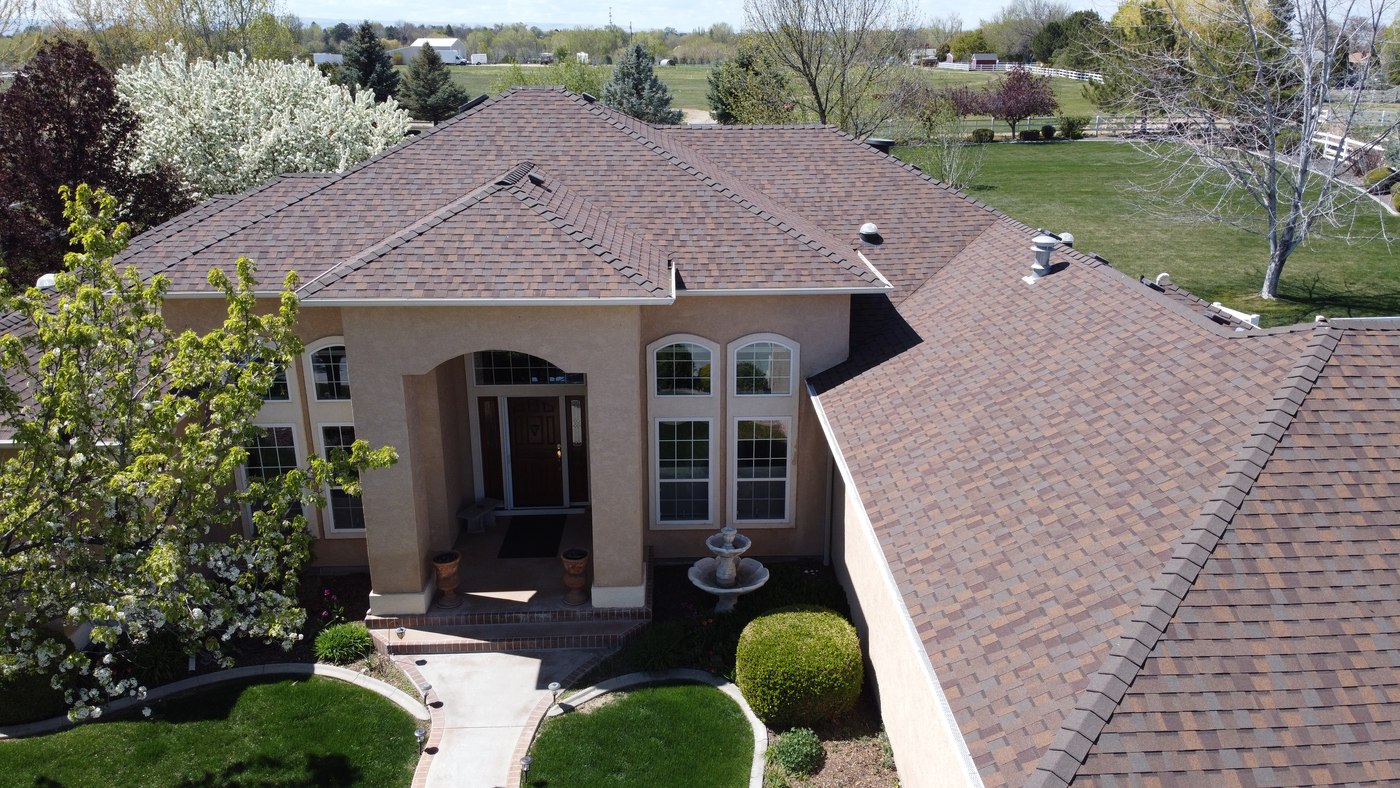
Boise gets roughly 206 sunny days per year and summer temperatures that regularly exceed 100 degrees. Your roof absorbs or reflects that solar energy, and the difference between an efficient and an inefficient roof can show up meaningfully on your utility bill every month from June through September.
How roofing affects energy use
A dark asphalt shingle roof on a Boise home in July can reach surface temperatures of 150 to 170 degrees Fahrenheit under direct sun. Research from Oak Ridge National Laboratory confirms this range for dark conventional roofing in hot climates. The heat that doesn't radiate back into the atmosphere transfers down through the decking into the attic, and from there into the living space. A properly cooled attic -- through both reflective roofing material and adequate ventilation -- significantly reduces that heat transfer.
The attic ventilation side of this equation is often more impactful than the shingle choice alone. A reflective shingle on a poorly ventilated attic still builds up heat because there's nowhere for the warm attic air to go. Both factors together produce the best result: a shingle that reflects more solar energy in the first place, combined with ventilation that moves the heat that does accumulate out of the attic space.
Cool roof shingles
Cool roof shingles use infrared-reflective granule technology to reflect more solar energy than conventional shingles in the same color range. CertainTeed's Landmark Solaris and Owens Corning's Cool-colored Duration shingles are two products we install in Boise and Meridian for homeowners focused on energy performance. Modern formulations allow medium and even darker color options that still meet Energy Star reflectance requirements, which addresses the aesthetic concern homeowners used to have with earlier cool roof products that were only available in light colors.
The premium over standard architectural shingles is modest -- typically 5% to 15% more per square installed -- and the payback through reduced cooling costs in Boise's summers is reasonable for homeowners planning to stay in the home.
Metal roofing
Standing seam metal roofing is the highest-performing option for energy efficiency in Boise's climate, and it achieves that performance in two distinct ways. First, bare or coated metal reflects a meaningful portion of solar radiation rather than absorbing it. Second, metal's high emissivity means it re-emits absorbed heat rapidly once the sun moves off it, rather than storing heat the way mass materials like clay tile do.
The more significant energy argument for metal in Idaho, though, is lifecycle cost. A standing seam metal roof installed on a Eagle or Star home today will likely still be in service when the home changes hands again decades from now. Eliminating two or three replacement cycles over a building's life represents substantial embedded energy savings in material production and installation, on top of the operational energy performance.
Idaho tax credits and rebates
Federal energy efficiency tax credits applicable to roofing products have changed frequently in recent years and eligibility depends on specific product certifications and installation timelines. Idaho Power and Intermountain Gas occasionally offer rebate programs tied to whole-home efficiency improvements. The most reliable way to determine current incentives is to confirm directly with your utility and a tax professional before making a material decision based on anticipated credits.