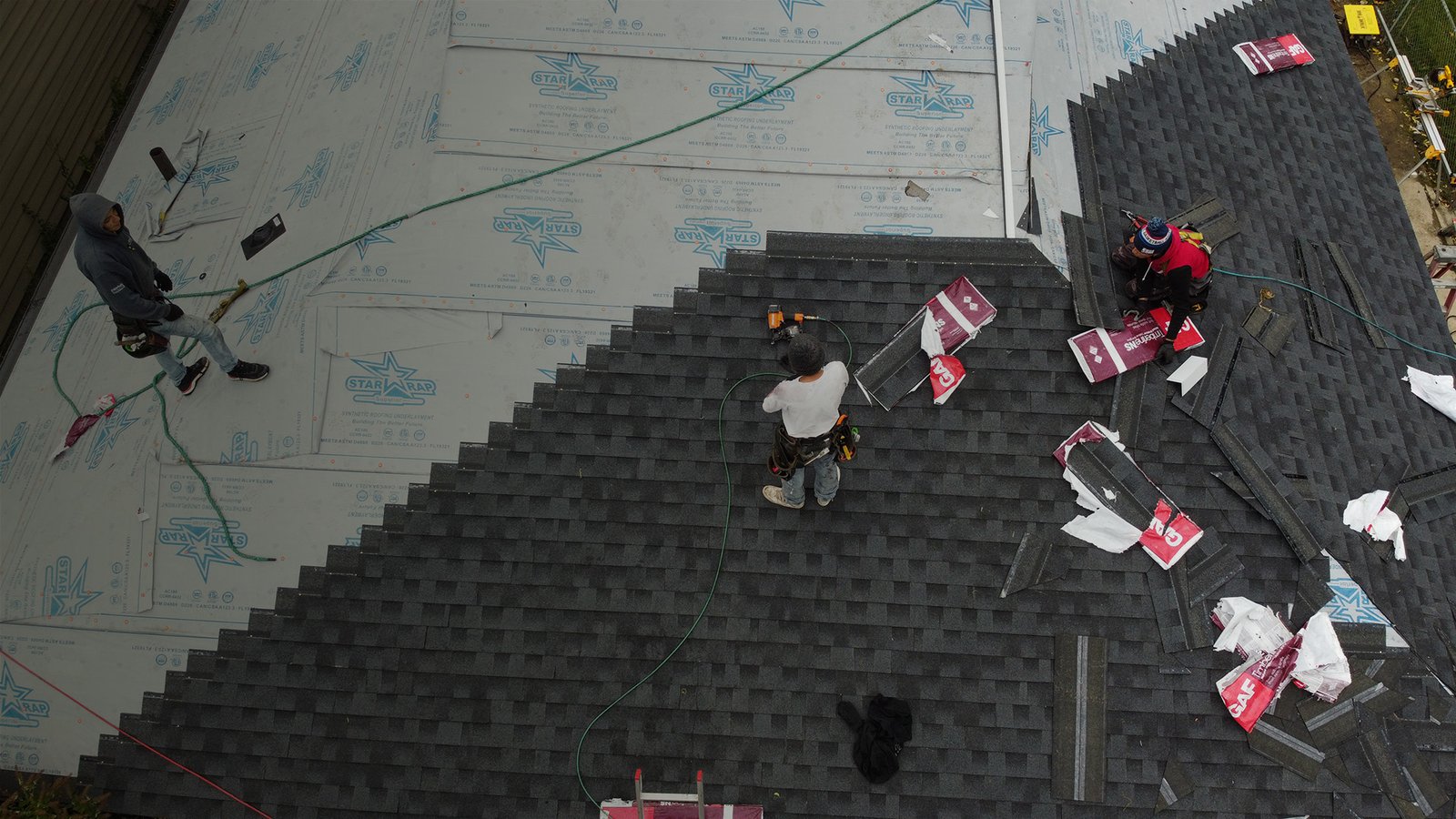
Your roof's lifespan depends on three things: the material it's made from, how well it was installed, and what Idaho's climate does to it over time. Most homeowners focus on the first two. The third is what actually determines whether a 30-year shingle makes it to 30 years in The Treasure Valley.
Average lifespans by material in Boise and surrounding areas
3-tab asphalt shingles are the thinnest and cheapest option, and the homes in Boise's older neighborhoods reflect that. The North End, the Bench, Southeast Boise, and much of older Nampa and Caldwell have a lot of these. Expect 15 to 20 years under Idaho conditions, often closer to the lower end when ventilation is poor or storm history is present.
Architectural shingles are what Blue Goat installs on most reroof projects throughout Ada and Canyon County. The dimensional profile sheds water better, and the heavier construction holds up to wind and impact more reliably than 3-tab. A properly installed architectural shingle roof in Boise should last 25 to 30 years, though we regularly see premature wear from inadequate attic ventilation installed at the time of original construction.
Presidential Shake shingles are a premium asphalt product that replicates the look of cedar shake without the maintenance demands. They're common on higher-end homes in Eagle and Meridian and carry realistic lifespans of 30 to 40 years when installed correctly and maintained.
Metal roofing, specifically standing seam, is the longest-lasting option available for Treasure Valley homes. A properly installed standing seam metal roof lasts 40 to 70 years. It handles snow load, sheds ice naturally without heat cables, and doesn't degrade under UV exposure the way asphalt does. We install a lot of these in McCall and the mountain communities where snow loads are significant, but they're increasingly common in Boise proper for homeowners who plan to stay long-term.
Why Idaho is harder on roofs than the manufacturer's warranty suggests
Roofing manufacturers test and rate their products against national average conditions. Boise isn't average.
Freeze-thaw cycling is the primary mechanical stressor. Boise winters regularly cross the 32-degree threshold in both directions, sometimes multiple times in a single week during shoulder months. Every time that happens, any water that has worked its way under shingles or into small cracks expands and contracts. Over years, that movement loosens shingles, opens up flashing gaps, and pushes water deeper into the roof assembly. It's slow cumulative damage that's easy to miss until water shows up inside.
UV exposure compounds the problem. Boise gets roughly 206 sunny days per year, more than Miami. Asphalt shingles are essentially a petroleum product, and sustained UV radiation breaks down the binders that hold granules in place. This is why granule loss in gutters often appears long before a roof shows obvious visual wear from the street.
Wind matters particularly in western Canyon County around Caldwell and Nampa, where sustained southwest winds are common. A shingle that looks intact from the ground can have a broken seal underneath that allows water intrusion during the next rain.
How age should shape your repair-or-replace decision
If your roof is under 15 years old and was professionally installed with quality materials, repairs are almost always the right call for isolated problems. Flashing failures, missing shingles, and small leak areas are fixable without replacing the whole roof.
Between 15 and 20 years is where it gets situational. A roof with consistent maintenance and no significant storm history can reasonably run to 25 years. One with neglected gutters, poor ventilation, or unreported hail damage may already be past its useful life even if it looks acceptable from the street.
Past 20 years on a 3-tab roof, or past 25 years on an architectural shingle roof, the math usually favors replacement over repeated repairs. Each repair buys less time as the surrounding material continues to age. The cost of interior water damage from a delayed replacement typically exceeds the cost of the roof itself.
What actually tells you a roof is failing
Most homeowners wait for interior water stains before acting. By that point, water has been working through the roof assembly for some time. The earlier signs are visible outside.
Granule accumulation in gutters or at downspout splash zones after rain is one of the most reliable early indicators. Some granule loss is normal across a roof's life, but heavy accumulation on a roof under 20 years old means the shingles are degrading faster than expected.
Shingles curling at the edges or cupping in the middle are past the point of repair. The asphalt is drying out and the shape cannot be reversed. Those areas are actively allowing water intrusion during every rain event.
Visible cracking or brittleness on individual shingles, particularly on south-facing slopes that receive the most direct sun, means the asphalt binder has broken down. Cracked shingles do not reseal.
Soft spots when walking the roof surface indicate the decking beneath has absorbed moisture. That is a structural issue that must be addressed during replacement regardless of what the shingles above look like.
If your home's roof is approaching any of these thresholds, a free estimate from Blue Goat Roofing includes a full written condition assessment. We serve homeowners throughout Boise, Meridian, Nampa, Eagle, and Caldwell, as well as all surrounding communities in The Treasure Valley.