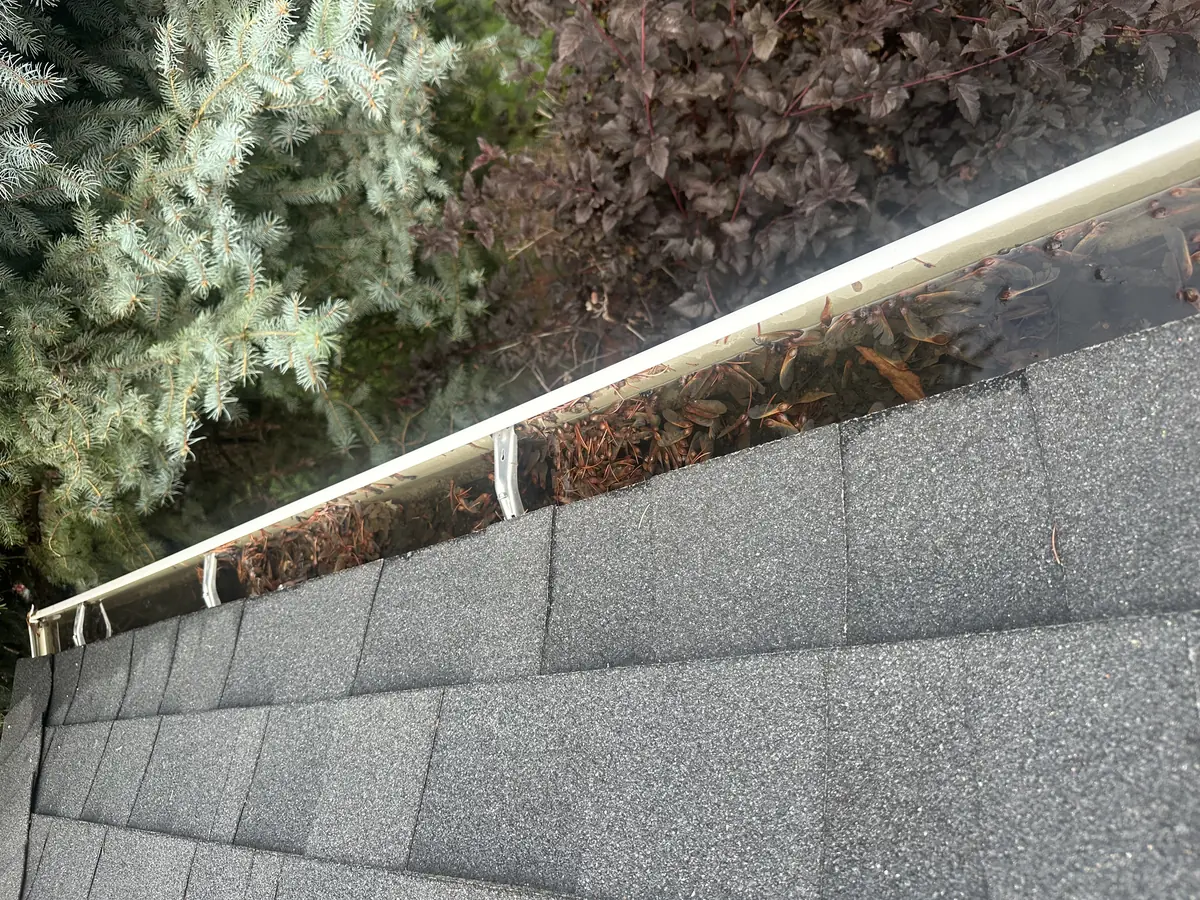
Gutters are one of the most overlooked components of a roofing system, and one of the most impactful when they fail. Most Boise homeowners don't think about their gutters until water is pouring over the edge during a rainstorm or pooling against the foundation. By the time either of those things happens, some degree of damage has already occurred.
How often to clean gutters in Boise
The Treasure Valley's tree mix creates a specific cleaning schedule requirement that differs from many parts of the country. Cottonwood trees release cotton and seed debris in late spring that mats into wet clogs as effectively as leaves. Pine trees shed needles year-round. Maples, locusts, and other deciduous trees contribute a full leaf drop in October and November.
Most Boise homes need cleaning twice a year: late spring after cottonwood season and late fall after leaf drop. Homes directly under large cottonwoods or with heavy pine coverage may need cleaning three to four times annually. The spring cleaning matters more than many homeowners realize -- cottonwood debris can completely seal a downspout opening and cause overflow conditions during the first significant summer thunderstorm.
Signs your gutters need attention
Gutters pulling away from the fascia at the attachment points indicate the brackets have been stressed, usually by the weight of water-filled debris or ice. The pulling creates gaps that allow water to run behind the gutter and down the exterior wall rather than through the system.
Rust staining or standing water visible through a downspout after rain has stopped means drainage is compromised somewhere in the system. Water that sits in gutters rather than draining freezes in winter and creates a direct path to ice dam formation.
Paint peeling or wood rot on the fascia directly behind the gutter is a sign that water has been running over the back edge of the gutter rather than through it. This usually means the gutter is either clogged or has lost its pitch toward the downspout.
Water at the foundation during or after rain events that doesn't correspond to other obvious drainage paths often traces back to gutter overflow rather than grading problems.
When to replace rather than repair
Aluminum gutters -- the most common type installed on Boise homes over the past few decades -- don't rust but develop seam failures, lose their pitch over time, and can be bent by ladders or debris. Individual seam repairs on sectional gutters are often short-lived because the surrounding metal has aged similarly.
Custom-fabricated gutters to your home's dimensions eliminate the seam failures that are the most common failure point in sectional systems. They're the standard we recommend for any gutter replacement throughout Boise, Meridian, Nampa, and Caldwell. They cost more upfront than sectional gutters but require fewer repairs over their service life.